

European driving requirements
What do you need to carry?
Select the country you’re driving in to view its equipment requirements.
Hiring a car? The rental company should normally provide any legally required equipment, but it is always worth checking everything is there before you drive away.
Driving in
You must carry
Only if…
Worth packing
Last checked: July 2026. Rules can vary depending on the vehicle, registration, region, road and weather conditions. Check official guidance and your rental agreement before travelling.
Know what to pack
Driving equipment explained
Warning triangles, high-vis vests, headlamp converters… it can feel like there is a lot to remember. Here is what each item does, when you might need it and what to check before setting off.
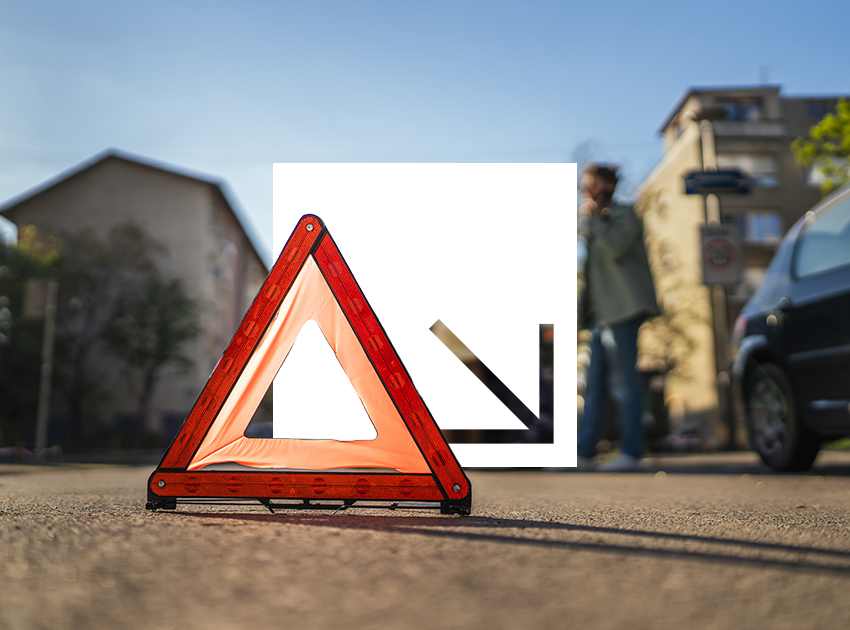
If you break down, a warning triangle helps other drivers spot your vehicle sooner. In many European countries it is one of the first things you will be expected to use, so check your hire car has one before leaving the rental desk.
Why might you need one?
It gives approaching drivers extra warning that your car has stopped or is blocking part of the road, giving them more time to slow down or safely change direction.
Where should you keep it?
It will usually be stored in the boot, luggage compartment or a designated space inside the car. Take a moment to find it before starting your journey so you are not searching for it at the roadside.
When should you use it?
Use it after a breakdown or accident when the local rules require it and it is safe to do so. Never put yourself at risk by walking into moving traffic. The correct placement distance can vary by country and road type.
In Spain, Spanish-registered vehicles must carry an approved connected V-16 warning beacon instead of warning triangles from 1 January 2026. Foreign-registered vehicles may continue to use warning equipment accepted by their country of registration.
A high-visibility vest makes you easier to see if you need to leave the car after a breakdown or accident. Hopefully you will never need it, but it can make a big difference on a dark or busy road.
Who needs to wear one?
The rules vary by country. Sometimes only the driver must wear one, while elsewhere anyone leaving the vehicle may need their own vest. Carrying one for every passenger is the safest approach.
Can it stay in the boot?
It is better to keep at least one vest inside the passenger area. If it is underneath your luggage in the boot, you may need to leave the car before you can put it on.
Does it need to be within reach?
In countries where you must put it on before leaving the vehicle, it needs to be easy to reach from your seat. A glove compartment, door pocket or space beneath a seat usually works well.
Taking your own car to Europe? UK headlights are designed for driving on the left, which means they can dazzle oncoming traffic when you drive on the right.
When might you need them?
When driving a UK-registered vehicle in continental Europe, you may need to adjust your headlights or fit suitable converters so the beam does not shine towards oncoming drivers.
Check your car before buying converters
Some modern cars have automatically adjusting headlights or a built-in tourist mode. Check your handbook before attaching adhesive converters, especially if the car has LED, xenon or adaptive lights.
You will not normally need converters when hiring a locally registered left-hand-drive car in continental Europe.
Taking a UK-registered car abroad? You may need to display a UK identifier on the rear of the vehicle.
What changed after Brexit?
The UK identifier replaced the former GB identifier. You may need a separate UK sticker if your number plate does not already show an accepted UK identifier alongside the Union flag.
Are there any exceptions?
In Spain, Cyprus and Malta, a separate UK sticker may still be needed regardless of the identifier shown on your number plate. Check the latest UK government advice before setting off.
You will not normally need a UK identifier when driving a car that has been hired and registered locally.
Hopefully you will never need it, but a first aid kit can be invaluable if someone picks up a cut or minor injury while you are waiting for roadside assistance or emergency services.
Do you legally need one?
A first aid kit is part of the required vehicle safety equipment in Germany. It is also associated with Belgian-registered vehicles, including locally registered Belgian hire cars.
In the other countries covered by this checker, it is generally recommended rather than compulsory for visiting passenger cars.
Before you set off
Have a quick look to make sure the kit is complete, still sealed where appropriate and has not expired. If anything is missing or appears to have been used, ask the rental company to replace it before you leave.
A vehicle fire extinguisher may help with a small, early-stage fire, but only use one when it is safe. If there is any risk to you or your passengers, move away from the vehicle and call the emergency services.
Where is one required?
A fire extinguisher is part of the compulsory safety equipment for cars in Poland. Belgian-registered cars are also expected to carry one, so it should be present in a locally registered Belgian hire car.
Spain requires extinguishers in some buses and heavier goods vehicles, but not as standard equipment in an ordinary passenger car.
What should you check?
Make sure it is securely stored, easy to reach and still within its service or expiry date. A loose extinguisher should never be left to roll around the passenger compartment.
Winter-driving rules are not the same everywhere. They may depend on the date, region, weather conditions or the signs shown on a particular road.
Where might winter equipment be required?
Germany requires suitable winter tyres during wintry road conditions. France requires winter tyres or snow chains in designated mountain areas from 1 November to 31 March.
Italy has regional and road-specific winter rules, while snow chains may be required in Spain and Poland when signs or conditions say they are needed.
Before fitting snow chains
Check that the chains are suitable for the tyres and vehicle. Follow the rental company’s instructions, as fitting the wrong chains could damage the car and may not be covered by the rental agreement.
Working lights are essential, particularly when driving at night, through tunnels or in poor weather.
Do you need to carry spare bulbs?
Spare bulbs are generally recommended across the countries in this checker rather than being a universal legal requirement for visiting passenger cars.
What about modern headlights?
Many modern LED, xenon and sealed lighting units cannot be replaced safely at the roadside. Check the vehicle handbook and contact the rental company or breakdown provider if a light stops working.
Before leaving the rental desk
A two-minute check before setting off could save a lot of stress later.
- Ask which safety equipment comes with the car.
- Check that legally required items are present.
- Make sure your high-vis vest is within easy reach.
- Check first aid kit and extinguisher expiry dates where relevant.
- Ask whether winter tyres or snow chains are included.
- Check whether crossing a border changes the equipment you need.
- Report anything missing before you drive away.
Requirements can vary according to the vehicle, season, region and journey. Check current official guidance and your rental agreement before travelling.

Comments are closed