
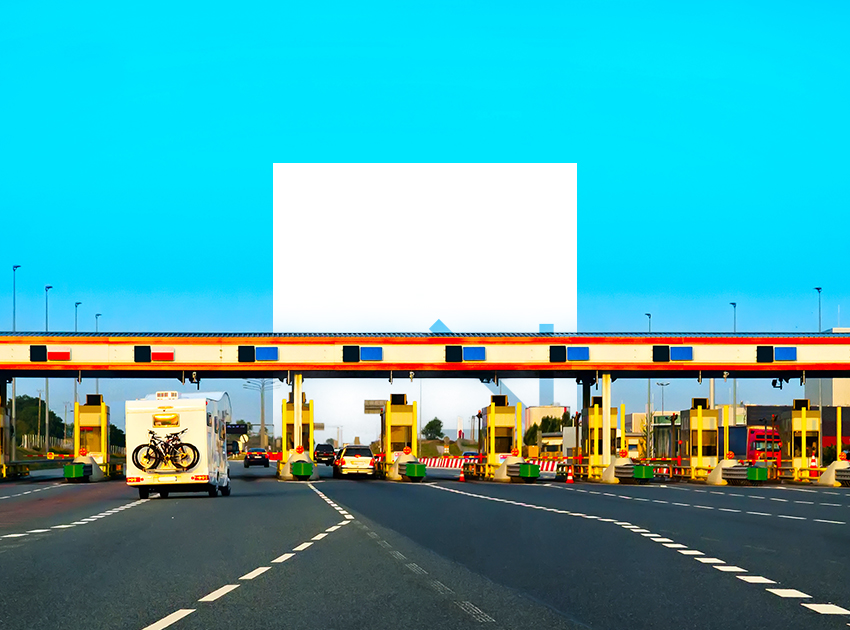
If you’re heading across Europe in a car, understanding how European toll roads work so you know what to expect will save you time, money and any potential headaches.
Roads in Europe with tolls on them are often faster, more direct and smoother than toll-free alternatives. However, they do vary from country to country, even sometimes city to city, from how much they’ll get you to pay to how the charges are enforced.
If you’re hiring a car, being aware of toll roads is important as the toll fees are expected to be covered by you. Unpaid tolls can become fines which will get billed to your rental company who will then not only charge you for the fine, but also an admin fee for the processing of the fine. The whole process will be easier if you’re able to anticipate toll booths in advance.
For those hiring a car, don’t forget your car hire excess insurance policy from ReduceMyExcess. Although we won’t reimburse you for unpaid tolls or fines, we can protect your wallet if your hire car sustains damage or is stolen and you then face an excess fee as a result.
How Do European Toll Roads Work?
There are three major types of toll collection across Europe: traditional pay-booths, electronic toll tags, and vignettes.
1. Traditional Pay Booths
These types of toll booths are common in countries like France, Italy, Spain, Norway and Croatia.
The way these booths work is that, you collect a ticket when you enter the motorway and then you pay upon exiting.
You’ll be able to pay by cash, major credit cards and by contactless although this does vary by country.
Sometimes lanes are divided into cash, card and electronic-pass lanes – make sure you choose the right lane.
France and Italy average €7-€20 per 100km which makes them some of the most expensive motorway networks in Europe.
2. Electronic Toll Tags / Transponders
Electronic toll tags and transponders are used in countries like Portugal, Italy, France and Spain.
The electronic tag in the car communicates with overhead gantries and then they are billed automatically.
Tag-only lanes don’t allow cash or card payments
If you’ve hired a car it might have an electronic tag fitted and these charges will then be applied automatically to your rental agreement, which you’ll pay for upon returning the vehicle.
3. Vignette / Digital Vignette
In countries such as Austria, Switzerland, Czech Republic, Slovakia and Hungary, a prepaid toll sticker, otherwise known as a vignette, is required.
A vignette acts as a prepaid toll permit, usually valid for a defined period.
Digital vignettes link your number plate to a database rather than using a physical sticker.
For example, Austria 10-day, 2-month and annual vignettes. Switzerland has one single option which is an annual vignette even for short visits.
For those hiring a car, a vignette should be included but always check at the desk when you pick up the keys to avoid any fines.
Country-by-Country Toll Systems
France 🇫🇷
France has a fairly extensive network of motorways otherwise known as autoroutes. You can pay either at the booth, or with an electronic Télépéage tag. These electronic tags are available through various independent companies and often can be used in a variety of European companies. Booths that are marked ‘rTélépéage’ or ‘t’ lanes are tag-only.
Spain 🇪🇸
Spain has a mix of free motorways (free autovías (A)) and tolls known as autopistas (AP). AP signs will tell you that the road is tolled.
In recent years roads that were previously tolled have become toll-free.
Italy 🇮🇹
Italy has a toll system called Autostrade which are comprised mostly of pay-booth tolls. There are some which you can use an electronic tag for too. It has been said that the unattended card machines can be temperamental so it’s a good idea to keep some euros handy.
Portugal 🇵🇹
Portugal is known for it’s fully electronic toll systems with no pay booths. Charges are captured via number plate. This does mean that it’s easy to accidentally incur charges if you miss the signs.
Austria & Switzerland 🇦🇹🇨🇭
In both Austria and Switzerland vignettes are mandatory if you want to use the motorway. If you drive without one you risk incurring quite substantial fees.
Germany 🇩🇪
There are no motorway tolls for cars in Germany but there are some tunnels and mountain passes that charge fees. There is also no vignette required for private vehicles.
Scandinavia (Norway, Sweden, Denmark)🇳🇴🇸🇪🇩🇰
These countries utilise camera-based electronic tolls mostly.
What You Can Expect to Pay
Prices can vary but typical ranges will help you plan and budget in advance.
- France: €8-€20 per 100km
- Italy: €7-€15 per 100km
- Spain: Many routes are free but the tolled routes average €5-€12 per 100km
- Portugal: Electronic toll roads vary but short sections might cost €1-€3
- Vignettes:
- Austria: from around €10 for 10 days
- Switzerland: from around €40 for 1 year
- Czech Republic: between €12-€50 depending on duration
What to Ask the Car Hire Company
If you’re hiring a car and suspect you will come across toll roads make sure you ask the right questions at the car hire desk before you drive off:
- Does the car have a toll tag?
- Is a vignette included?
- How are tolls charged to you?
- What are their admin fees for processing fines?
If you pay manually at a toll booth, make sure you keep proof in case you need to dispute anything later on.
Final Thoughts
European toll roads can seem complicated but once you understand how each system works, they’re easy to manage and will be worth driving on tolled roads for their quality and speed. With a bit of preparation, you can avoid fines, stay in control of costs and enjoy a smooth drive across the continent.

Comments are closed